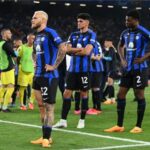
On an unforgettable night at Signal Iduna Park, the match witnessed UEFA Champions League Between Borussia Dortmund and Atalanta there were exciting tactical and sporting moments, and the final result (2-0) was just the beginning of a complex story that goes beyond the boundaries of the green rectangle.
The underlying reasons for Atalanta’s management’s hatred of Borussia Dortmund’s management in the Champions League
The crisis began even before kickoff, when Atalanta’s management decided to boycott the official UEFA luncheon, a tradition meant to foster friendly relations between administrations before major sporting competitions. The reason? Deep disagreements stemming from the transfer of rising star Samuele Inácio, who moved from Atalanta’s youth academy to Borussia Dortmund in a manner that sparked widespread controversy.
The Samuel Ignacio controversy: A transfer story that sparked anger and debate
Ignacio, who came through Atalanta’s academy at the age of seven, is considered a precious gem that the Italian club lost in a manner described by its president, Luca Percassi, as “an insult and an open wound.” According to sources within Atalanta’s management, Dortmund exceeded the permitted transfer window regulations and refused direct dialogue, prompting Atalanta to appeal to FIFA to defend its rights and strive to preserve the reputation of its academy in European football.
This dispute challenges established sporting norms regarding team management and exemplifies the depth of sporting conflicts and their intersection with issues of principles and mutual respect between clubs. From a tactical standpoint, Borussia Dortmund maintained their focus, capitalizing on an early start that saw Serhou Guirassy score in the third minute, followed by another goal from Pierre before halftime.
The repercussions of the conflict on sporting competition and the atmosphere within the UEFA Champions League
This dispute not only affected relations between the clubs’ administrations but also extended to the competitive atmosphere on the pitch, where Atalanta’s players appeared tense and burdened by psychological pressure, which was reflected in their overall performance during the match. At the same time, this situation represents a test of sportsmanship in European football, which aspires to transcend conflicts and maintain a fair and exciting competition.
Why is Borussia Dortmund refusing to talk to Atalanta?
In contrast, Borussia Dortmund, through their sporting director Lars Ricken, insisted that all actions taken were in accordance with FIFA regulations, suggesting that the absence of lunch was merely an overreaction. Nevertheless, the current situation reflects a stalemate, with this coldness in dealings fueling resentment and bitterness within Atalanta’s management towards Dortmund’s, who are perceived as having crossed red lines in their transfer dealings.
Through these events, we realize that the Champions League is no longer just a purely sporting competition, but a battle with human and ethical dimensions, where athletic rivalry intersects with economic and administrative conflicts that cast a shadow over the relationships between clubs. This story provides a vivid example of how behind-the-scenes tensions can significantly impact the performance and technical analysis of teams during major European football competitions.
For more details on the Borussia Dortmund vs. Atalanta match, you can follow the detailed analysis on Championship siteIt showcases all aspects of performance and tactics, as well as the events that occurred during the match.